Monday, 2 April 2018

Dusun Wangun as Tourism


Dusun Wangun adalah sebuah desa yang terletak di Kecamatan Banjaran, Kabupaten Bandung, lebih tepatnya di Gunung Puntang. Hampir semua penduduknya bekerja sebagai petani kopi. Di Dusun Wangun ini terdapat 31 rumah, desa ini termasuk dalam Program Penataan Lingkungan Permukiman Berbasis Komunitas (PLPBK), dikarenakan pada tahun 2012 desa ini masih jauh dari kata layak. Dengan adanya program tersebut desa menjadi lebih tertata dan akses masuk desa menjadi bagus.

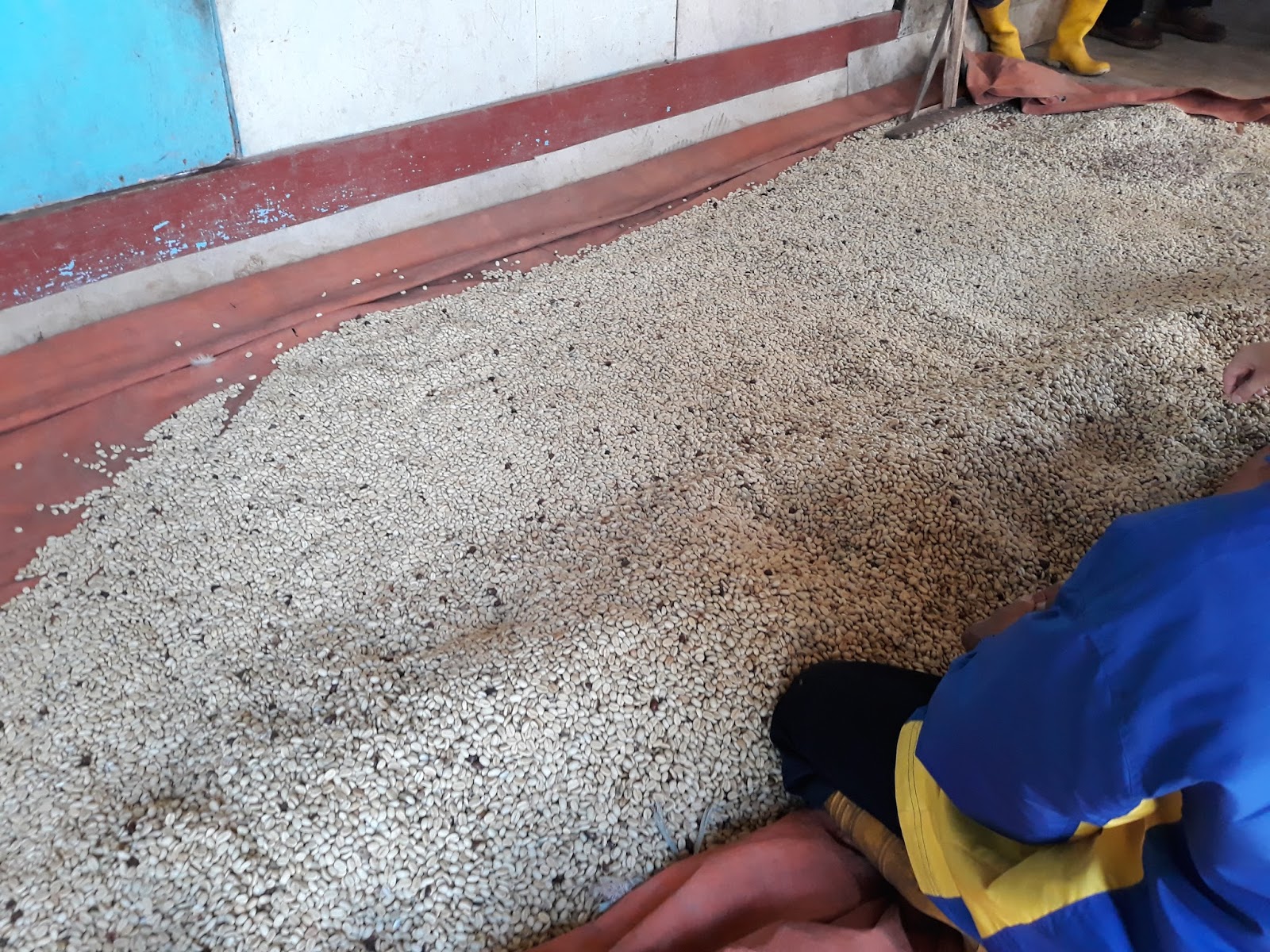
Dusun Wangun bisa menjadi desa wisata berdasarkan beberapa kriteria, seperti ; akses jalan menuju desa wangun itu sudah bagus, maksud kata bagus ini adalah jalan tersebut mampu dilalui oleh kendaraan besar seperti truk kecil, dan juga jalannya sudah di aspal, tidak lagi jalan tanah. Selain itu, memiliki objek-objek menarik, contohnya adalah hutan yang berada di gunung puntang yang bisa dijadikan trail hiking, adanya pertanian kopi dan pengelolaan kopi pun menjadi daya tarik tersendiri, karena kita dapat melihat langsung bagaimana  kopi itu dipetik, jenisnya dan pemprosesaanya menjadi kopi siap kemas.

Jika dari faktor lainnya adalah kopi khas dari desa wangun ini sudah tersebar luas dan menjadi daya tarik masyarakat yang membeli produk tersebut mengunjungi desa wangun. Selain itu, faktor lainnya adalah adanya dorongan pemerintah daerah untuk menjadikan desa wangun menjadi desa wisata.

Tetapi masih perlu diperbaiki berbagai fasilitas-fasilitas yang ada di desaa wangun, seperti perbaikan toilet umum agar semakin nyaman, dibuatnya signal tower agar akses internet lancar, dengan lancarnya internet dapat memudahkan mempromosikan desa wangun. Selain itu, perlunya alat-alat pengelolaan kopi agar kualitasnya semakin bagus, dan bisa bersing di pasar nasional.

Jadi dengan dibuatnya desa wisata di desa wangun membantu warganya untuk tidak hanya bergantung pada pertanian kopi, tapi bisa juga menjual makanan ringan atau minuman kepada wisatawan, tour guide dan lainnya. Dengan begitu penduduk di desa wangun dapat memiliki berbagai pekerjaan yang seperti petani dan penjual di warung, dengan begitu bisa memaksimalkan pendapatan mereka.

Friday, 22 July 2016

Ammunition Pouch Dutch East Indie Army (NI04AP-01-001)

Greetings...

I've got new antique military item, it's original and very rare...
A pair of Patroontasch Infanterie Model 1903 (Ammunition Pouch for Infantry Model 1903) of the Netherlands East Indie Army.
I'll share to you one of them now and the other one later.


These are some informations...

Simple: Pouch leather dark brown Large

Detail: Patroontasch Infanterie Model 1903 Ammunition pouch for 6 x Mannlicher issued for the Konijklijk Nederland-Indische Leger /
Royal Netherland Indies Army from 1903 to 1942.

Marked: CW
N
11 41
W Z

CW (Artillerie Constructie Winkel at Soerabaja)

N (Nieuw (New) meaning a new production)

11 41 (production date: November 1941)

W (unknown meaning)

Z (the inspection code from 1939 till 1942)

I'm constructing a new blog all about my historical collection in here


Tuesday, 22 July 2014

Rebut Bandung Kembali

Rebut Bandung Kembali was a song about the spirit to take Bandung from its occupation by the Dutch. Composed during the Long March of the Indonesian Army's 4th Division "Siliwangi"

Lyrics:
REBUT BANDUNG KEMBALI

Gempur dan rebut
Bandung kembali
Itu janji kita
Setiap hari

Janganlah mundur
Setapak kaki
Sampai kita
Bekerja kembali

Garis depan dan belakang
Pereratkanlah tali
Ingat sedang berjuang
Jangan saling sakiti

Ternyata suatu bukti
Tanda pengorbanan yang suci

Gempur rebut
Terus maju
Kita harus satu padu
Gempur rebut
Terus maju
Kita harus satu padu

Thursday, 26 June 2014

TSA Games

Greetings, comrades...
It's been a long long time since my last post.

TSA Games... i think you've never heard about it before.

This is my game developing game. Only 4 person. Hehe

Now we're working on our first project, we call it PETA, The Story from Southeast Asia. The name taken from the Voluntary Army in Java on The Japanese Occupation of Indonesia. PETA is abbreviation of "Pembela Tanah Air" or "Defenders of the Motherland".

The story is not about the PETA, but the Long March of the Indonesian Army's 4th Division "Siliwangi" From Jogjakarta get back to their territory in West Java after the Dutch second Military Aggression to occupy Maguwo Airfield and the Indonesian Republicans' Capital city of Jogjakarta.

Friday, 24 May 2013

IDR @ Pangalengan


Panzerlied

The Panzerlied is one of the best known Wehrmacht songs. It was composed in June 1933 by Oberleutnant Kurt Wiehle while on his way to Königsbrück. Wiehle adapted a German sailor's song, writing lyrics more appropriate to the Panzerwaffe. At the time, Germany was clandestinely developing an armored force in defiance of the Treaty of Versailles. The song could be considered as a reflection of the German re-armament, launched in the same time frame as the song was written.
It has gained fame in the English-speaking world due to its usage in the 1965 film Battle of the Bulge. While throughout that film German characters speak English, the song is sung in the original German.
The reference in the Fourth stanza to enemy cannons "hidden in yellow sand" is likely to have been added under the influence of Rommel's "Afrika Korps" campaign in North Africa, as in 1933 it could hardly have been predicted that German tanks would be involved in fighting in a desert environment.
The Panzerlied is still in use by Bundeswehr and Österreichisches Bundesheer today.
The song is also sung by the Chilean Military,and the tune is used for the French Foreign Legion song "Képi Blanc" and, unofficially, by some motorized and parachute units of the Italian army.
The song is also used by the South Korean Army sung in Korean as a Marching Song for its Tank and other Motorized units.
The tune of the Panzerlied is used as the unofficial anthem for the German community of Namibia, and the unofficial anthem of the then South African-ruled South-West Africa (present day Namibia). This song is known as "Das Südwesterlied" or "Hart wie Kameldornholz".
Lyrics:
Ob's stürmt oder schneit, ob die Sonne uns lacht,
Der Tag glühend heiß, oder eiskalt die Nacht,
Verstaubt sind die Gesichter, doch froh ist unser Sinn,
Ja, unser Sinn,
Es braust unser Panzer im Sturmwind dahin. (x2)

Mit donnernden Motoren, geschwind wie der Blitz,
Der Feinde entgegen, im Panzer geschützt
Voraus den Kameraden, im Kampf steh'n wir allein,
Ja wir allein,
So stoßen wir tief in die feindlichen Reih'n. (x2)

Wenn vor uns ein feindlicher Panzer erscheint,
Wird Vollgas gegeben und ran an den Feind.
Was gilt denn unser Leben für uns'res Reiches Heer?
Ja, Reiches Heer.
Für Deutschland zu sterben ist unsre höchste Ehr'. (x2)

Mit Sperren und Tanks hält der Gegner uns auf,
Wir lachen darüber und fahren nicht drauf.
Und schüttelt er gar grämlich und wütend seine Hand,
Ja seine Hand,
Wir suchen uns Wege, die keiner sonst fand. (x2)

Und läßt uns im Stich einst das treulöse Glück,
Und kehren wir nicht mehr zur Heimat zurück,
Trifft uns die Todeskugel, ruft uns das Schicksal ab,
Ja, Schicksal ab,
Dann wird unser Panzer ein ehernes Grab! (x2)


Sources:
en.wikipedia.org/wiki/panzerlied